Tag Archives: Stormwater Treatment

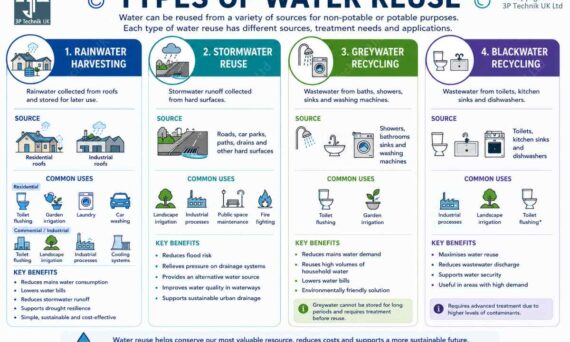
Four types of Water Reuse

What is Water Reuse? A Guide to Water Reuse and Sustainable Water Management in the UK

Water resources across the UK are facing increasing pressure from population growth, changing rainfall patterns and periods of drought. As a result, water reuse is becoming an increasingly important part of sustainable water management. Water reuse involves collecting and treating water from various sources so it can be used again for practical purposes. These sources […]

Read More

6PPD and 6PPD-q research studies

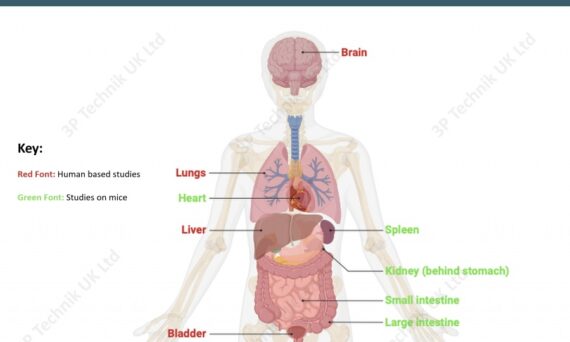
6PPD and 6PPD-q effects in animals and humans

Since publishing my last paper at the end of 2024, research on the impact of 6PPD and its derivative, 6PPD-quinone (6PPD-q), on fish, mammalian, and human health has made considerable progress. As a brief overview, 6PPD is a common tyre additive and is therefore released into highway water runoff in environmentally significant concentrations. 6PPD is […]

Read More

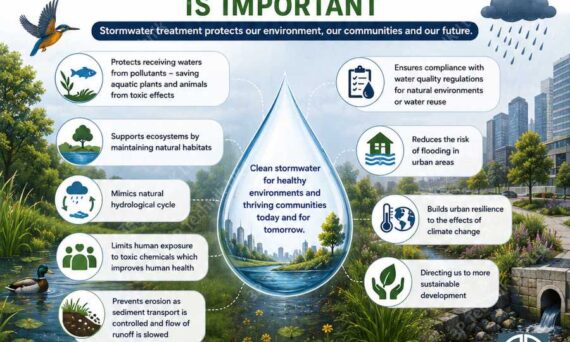
Why Stormwater Treatment is important. Infographic by 3P Technik UK

What is stormwater treatment?

Stormwater treatment involves removing pollutants from stormwater runoff using various techniques to improve water quality before it flows into receiving water bodies or is even reused for other purposes. Why is stormwater treatment needed? Climate change is changing the natural hydrological system with more frequent and intense rainfall predicted for the UK. Couple this with […]

Read More

Road Runoff Pollution Pathway (steps 1 to 3 of 5)

Road Runoff Pollution: How Road Surfaces and Road Markings Release Microplastics and Toxic Contaminants

The Hidden Sources of Pollution in Our Stormwater Systems When road pollution is discussed, attention usually focuses on vehicle emissions, tyre wear particles, brake dust and fuel leaks. While these are undoubtedly significant sources of contamination, they are not the only pollutants entering our rivers, lakes and oceans through stormwater runoff. The roads themselves, and […]

Read More

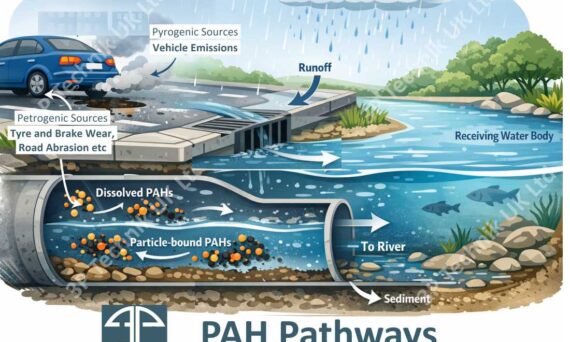
PAHs Pathways in Stormwater Runoff if Untreated

Stormwater Treatment of PAHs: Why Particle Size Distribution Matters for SuDS Design

Understanding PAHs in Stormwater Runoff Stormwater runoff is a significant pathway for pollutant transport into receiving water bodies. Among these pollutants, Polycyclic Aromatic Hydrocarbons (PAHs) are a main concern in stormwater treatment, due to their persistence and toxicity in our environments. Particle Size Distribution (PSD) aids in determining how PAHs behave- in terms of their […]

Read More

Infographhic: Sources of Total Suspended Solids (TSS) in road run off and contaminants that bind to them.

Total Suspended Solids in Road Runoff and Associated Contaminants

What are Total Suspended Solids? In stormwater runoff, Total Suspended Solids (TSS) refers to undissolved solid particles larger than 0.45µm. Anything smaller is considered a dissolved substance. Pollutants can bind to or become trapped within these solid particles, making TSS a highly effective contaminant transport mechanism from surface road runoff into receiving water bodies. In […]

Read More

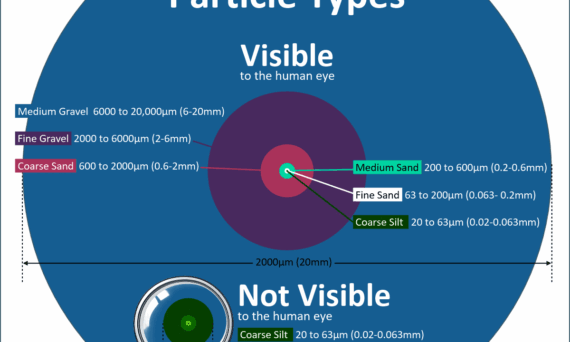
Relative sizes of particle types found in stormwater run off by 3P Technik UK

The Importance of Particle Size Distribution in Stormwater Design

Stormwater management involves managing both the quantity and quality of surface runoff. An appreciation of a site’s Particle Size Distribution (PSD) is crucial for effective stormwater quality management. The PSD influences sediment transport, settling rates and determines the effectiveness of treatment systems in terms of capturing, retaining and so permanently removing contaminants found in stormwater […]

Read More

Tyre Wear Paricles in Stormwater Road Run Off - MBT and DPG

Tyre Wear Particles in Stormwater: Why MBT and DPG Chemical Contamination Matters

Tyre wear particles (TWPs) are now recognised as a significant and largely unmanaged source of chemical contamination in urban stormwater. Among the most important tyre-derived chemicals are the vulcanisation accelerators mercaptobenzothiazole (MBT) and diphenylguanidine (DPG), which are used globally to produce durable, heat-resistant rubber. While essential to tyre performance, increasing evidence shows these additives pose […]

Read More

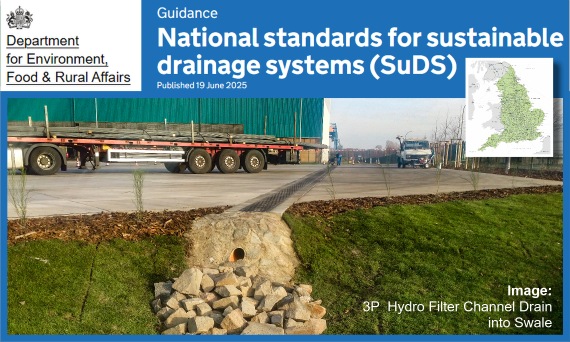
SuDS Standards in England - Blog Header image

SuDS Standards in England UK

The new SuDS standards in England were published by the Department for Environment Food & Rural Affairs (DEFRA) on the 19th of June 2025. They are a welcome step in improving the management of surface water drainage and the pollution from water run-off in England. These non-statutory standards for Sustainable Drainage Systems (SuDS) are for […]

Read More

NJDEP, NJCAT what are they and what are their roles in Stormwater Manufactured Treatment Devices?

Understanding the Roles of NJDEP and NJCAT in New Jersey’s Stormwater Manufactured Treatment Device Programme

Both UK and International Stormwater Manufactured Treatment Devices are often certified under New Jersey’s stormwater treatment protocols and best practices, but who are NJDEP and NJCAT and what do they do? As the New Jersey Department of Environmental Protection (NJDEP) certification program for stormwater Manufactured Treatment Devices (MTDs) has evolved over the years, one issue […]

Read More

3P Technik UK Ltd
Privacy Overview

This website uses cookies so that we can provide you with the best user experience possible. Cookie information is stored in your browser and performs functions such as recognising you when you return to our website and helping our team to understand which sections of the website you find most interesting and useful.