Tag Archives: PAHs in Stormwater

Why Stormwater Treatment is important. Infographic by 3P Technik UK

What is stormwater treatment?

Stormwater treatment involves removing pollutants from stormwater runoff using various techniques to improve water quality before it flows into receiving water bodies or is even reused for other purposes. Why is stormwater treatment needed? Climate change is changing the natural hydrological system with more frequent and intense rainfall predicted for the UK. Couple this with […]

Read More

Road Runoff Pollution Pathway (steps 1 to 3 of 5)

Road Runoff Pollution: How Road Surfaces and Road Markings Release Microplastics and Toxic Contaminants

The Hidden Sources of Pollution in Our Stormwater Systems When road pollution is discussed, attention usually focuses on vehicle emissions, tyre wear particles, brake dust and fuel leaks. While these are undoubtedly significant sources of contamination, they are not the only pollutants entering our rivers, lakes and oceans through stormwater runoff. The roads themselves, and […]

Read More

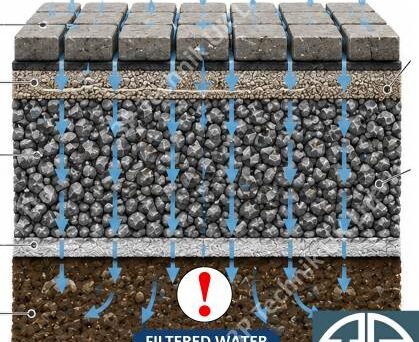
Permeable Pavement Systems and PAHs

Can Permeable Pavement Systems Treat PAHs?

Permeable Pavement Systems (PPS) are one of the most widely used Sustainable Drainage Systems (SuDS) techniques in the UK. They are commonly incorporated into residential developments, car parks, public schemes and low-speed roads to reduce runoff volumes, provide source control and improve water quality. Unlike conventional (impermeable) pavements, PPS allow rainfall and surface water runoff […]

Read More

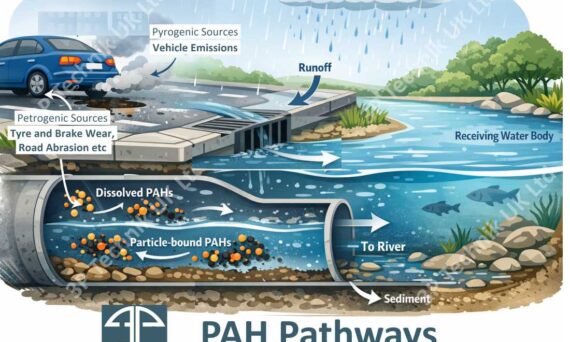
PAHs Pathways in Stormwater Runoff if Untreated

Stormwater Treatment of PAHs: Why Particle Size Distribution Matters for SuDS Design

Understanding PAHs in Stormwater Runoff Stormwater runoff is a significant pathway for pollutant transport into receiving water bodies. Among these pollutants, Polycyclic Aromatic Hydrocarbons (PAHs) are a main concern in stormwater treatment, due to their persistence and toxicity in our environments. Particle Size Distribution (PSD) aids in determining how PAHs behave- in terms of their […]

Read More

3P Technik UK Ltd
Privacy Overview

This website uses cookies so that we can provide you with the best user experience possible. Cookie information is stored in your browser and performs functions such as recognising you when you return to our website and helping our team to understand which sections of the website you find most interesting and useful.