Category Archives: Stormwater

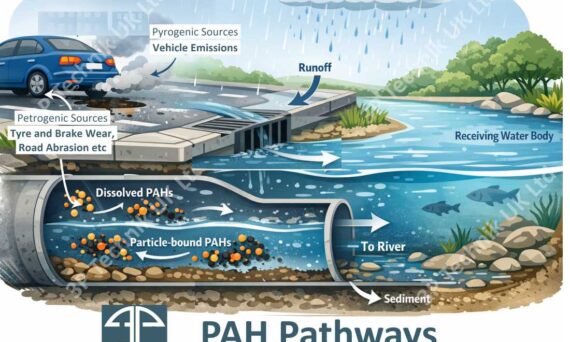
Infographhic: Sources of Total Suspended Solids (TSS) in road run off and contaminants that bind to them.

Total Suspended Solids in Road Runoff and Associated Contaminants

What are Total Suspended Solids? In stormwater runoff, Total Suspended Solids (TSS) refers to undissolved solid particles larger than 0.45µm. Anything smaller is considered a dissolved substance. Pollutants can bind to or become trapped within these solid particles, making TSS a highly effective contaminant transport mechanism from surface road runoff into receiving water bodies. In […]

Read More

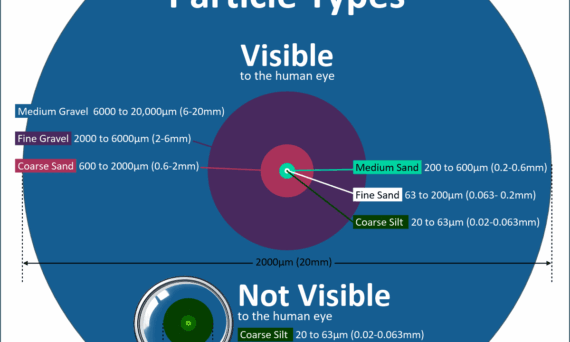
Relative sizes of particle types found in stormwater run off by 3P Technik UK

The Importance of Particle Size Distribution in Stormwater Design

Stormwater management involves managing both the quantity and quality of surface runoff. An appreciation of a site’s Particle Size Distribution (PSD) is crucial for effective stormwater quality management. The PSD influences sediment transport, settling rates and determines the effectiveness of treatment systems in terms of capturing, retaining and so permanently removing contaminants found in stormwater […]

Read More

Tyre Wear Paricles in Stormwater Road Run Off - MBT and DPG

Tyre Wear Particles in Stormwater: Why MBT and DPG Chemical Contamination Matters

Tyre wear particles (TWPs) are now recognised as a significant and largely unmanaged source of chemical contamination in urban stormwater. Among the most important tyre-derived chemicals are the vulcanisation accelerators mercaptobenzothiazole (MBT) and diphenylguanidine (DPG), which are used globally to produce durable, heat-resistant rubber. While essential to tyre performance, increasing evidence shows these additives pose […]

Read More

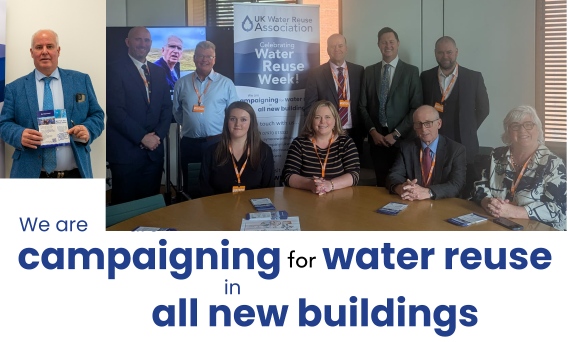
Members of the Senedd and Parliament align with campaigners for water reuse.

Rainwater Reuse Gains Momentum Across UK as Parliament and Senedd Host Parallel Events

The case for rainwater reuse received a powerful double endorsement during Water Reuse Week with coordinated events taking place in both Westminster and the Senedd. In London, members of the UK Rainwater Management Association (UKRWA) convened at the Houses of Parliament for a high-level meeting with Lee Pitcher, MP for Doncaster East, who is spearheading […]

Read More

NJDEP, NJCAT what are they and what are their roles in Stormwater Manufactured Treatment Devices?

Understanding the Roles of NJDEP and NJCAT in New Jersey’s Stormwater Manufactured Treatment Device Programme

Both UK and International Stormwater Manufactured Treatment Devices are often certified under New Jersey’s stormwater treatment protocols and best practices, but who are NJDEP and NJCAT and what do they do? As the New Jersey Department of Environmental Protection (NJDEP) certification program for stormwater Manufactured Treatment Devices (MTDs) has evolved over the years, one issue […]

Read More

River eutrophication - a reason for nutrient neutrality.

Mitigation Measures for Nutrient Neutrality

What is Nutrient Neutrality? Pollution caused by too many nutrients, particularly nitrogen and phosphorus, in our rivers and estuaries is a big problem for some locations. The nutrients of concern arise from fertilisers, untreated or partially treated sewage and water running off developments (to name a few sources). Natural England therefore has created the “National […]

Read More

Simple Hydrograph

Smart Rainwater Harvesting to help Prevent Floods

How smart rainwater harvesting (with a water butt or large above-ground water tank) can play its part to slow the flow of stormwater and help prevent floods and in particular overflow from sewers. Floods are again making the news in the UK as Storm Ciara brought heavy rainfall to parts of the north and west […]

Read More

Artificial Turf showing Rubber Crumb Infill plastic

How to stop Microplastics from Artificial Turf Sports Pitches Polluting our Oceans

Anyone who trains regularly on an artificial turf field or 3G sports pitch (or indeed has a son or daughter who does) will recognise the black ant-sized speckles of plastic that follow the player from the field to the car and then into home. The pesky microplastics from artifical turf are notorious for getting flicked […]

Read More

HydroSystem 1500 DIBt Approval for construction.

HydroSystem 1500 – Stormwater Treatment Device

A Hard SUDS stormwater treatment device to treat polluted stormwater runoff from roads, car parks, metal roofs, industrial sites and artificial sports pitches. Connectable surface area from 1600 to 3600m2 depending on the contamination level of the runoff. For installation in either concrete or plastic chambers within 1500mm shafts. Fully DIBt approved, and so meets […]

Read More